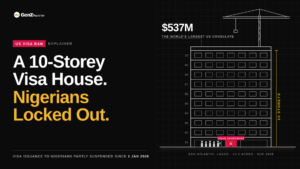

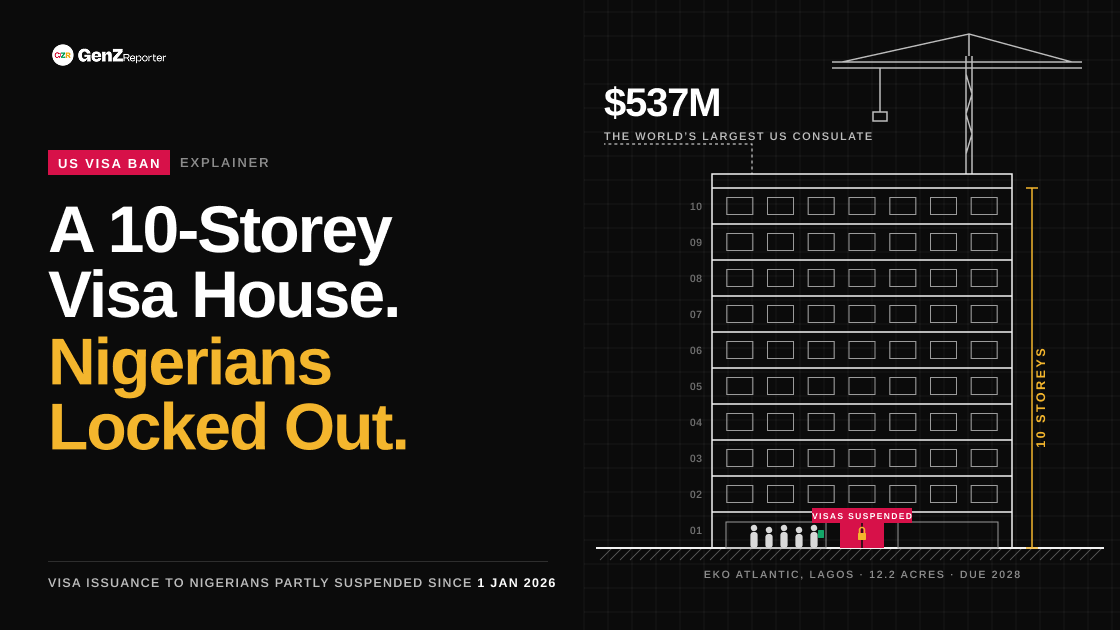
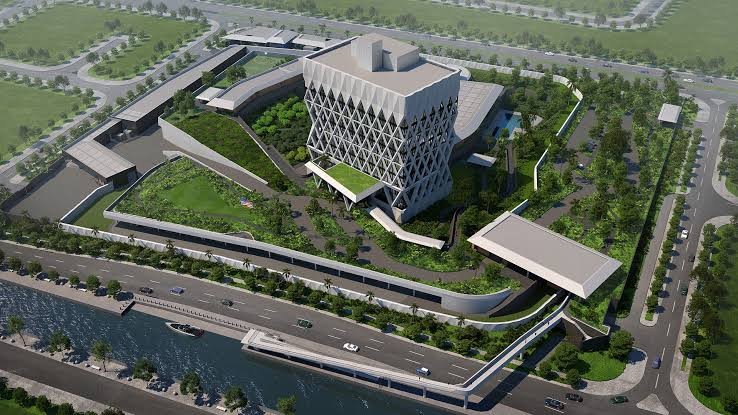
The United States is spending $611 million to build a new consulate in Lagos,, which will be the world’s largest US diplomatic building when it opens in 2028. According to Washington Post, this massive complex is designed to strengthen America’s relationship with Nigeria and advance mutual interests in trade, investment and innovation. But while the Americans are making that kind of investment here on our soil, what does the relationship look like for Nigerians trying to travel there?
In the 2025 US fiscal year, 57 per cent of all Nigerian applicants for business and tourist visas were refused. And starting in January 2026, the US State Department partially suspended visa issuance to Nigerians in several categories, including visitor visas, student visas and some immigrant visas. With such a high refusal rate, how much are Nigerians staking?
A standard US visitor visa application costs $185, and you pay that whether your application succeeds or not. In the 2025 fiscal year alone, US consular officers decided over 125,000 Nigerian B-visa applications. At the rate of $185, that represents an estimated $23.1 million spent by Nigerian citizens just to apply. That’s not an official figure for total profits from applications, but it shows the staggering amount of money ordinary Nigerians lose every year trying to access the United States.
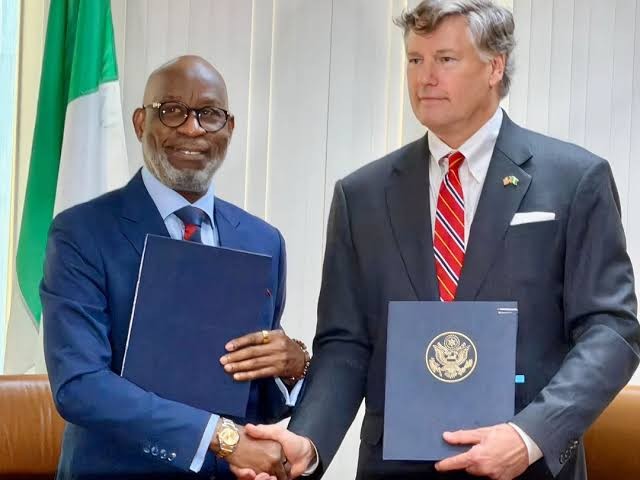
Despite these restrictions, the economic relationship between the two countries remains positive. In September 2026, both governments signed a major agreement on critical solid minerals. Nigeria says it wants American capital to build local processing plants and create jobs. In contrast, the United States wants secured access to the lithium, nickel, and rare earths it needs for its clean energy and technology industries.
But if Nigerian engineers, investors and business owners still face restrictions on travelling to the US, how are they supposed to build the partnerships and participate in the industries this deal promises to create? And if visa access is not part of what Nigeria is negotiating for, who exactly is the government negotiating for?
Sources
- Bureau of Overseas Buildings Operations (OBO). (n.d.). Lagos – New U.S. Consulate General Project. U.S. Department of State. https://oboportfolio.state.gov/lagos/
- Channels Television. (2026, September 24). Nigeria, US sign mineral investment pact. Channels TV. https://www.channelstv.com/2026/09/24/nigeria-us-sign-mineral-investment-pact/
- Federal Ministry of Information and National Orientation. (2026, September 23). Nigeria, US sign mineral investment pact. Federal Government of Nigeria. https://fmino.gov.ng/nigeria-us-sign-mineral-investment-pact/
- News Central TV [@NewsCentralTV]. (2026, September 24). Nigeria and the United States sign bilateral mineral investment pact in New York [Video post]. X (formerly Twitter). https://x.com/NewsCentralTV/status/2110091526906982500
- Punch (2026, September 24). Nigeria, US sign pact to deepen mining investment. https://punchng.com/nigeria-us-sign-pact-to-deepen-mining-investment/
- U.S. Department of State, Bureau of Consular Affairs. (2025). Adjusted refusal rates for B visas by nationality: Fiscal year 2025 [Data table]. U.S. Department of State. https://travel.state.gov/content/dam/visas/Statistics/Non-Immigrant-Statistics/RefusalRates/FY25.pdf
- U.S. Department of State, Bureau of Consular Affairs. (2026, February 2). Suspension of visa issuance to foreign nationals to protect the security of the United States. Travel.State.Gov. https://travel.state.gov/content/travel/en/News/visas-news/suspension-of-visa-issuance-to-foreign-nationals-to-protect-the-security-of-the-united-states.html
- U.S. Department of State, Bureau of Consular Affairs. (n.d.). Fees for visa services: Nonimmigrant visa application processing fees. Travel.State.Gov. https://travel.state.gov/content/travel/en/us-visas/visa-information-resources/fees/fees-visa-services.html